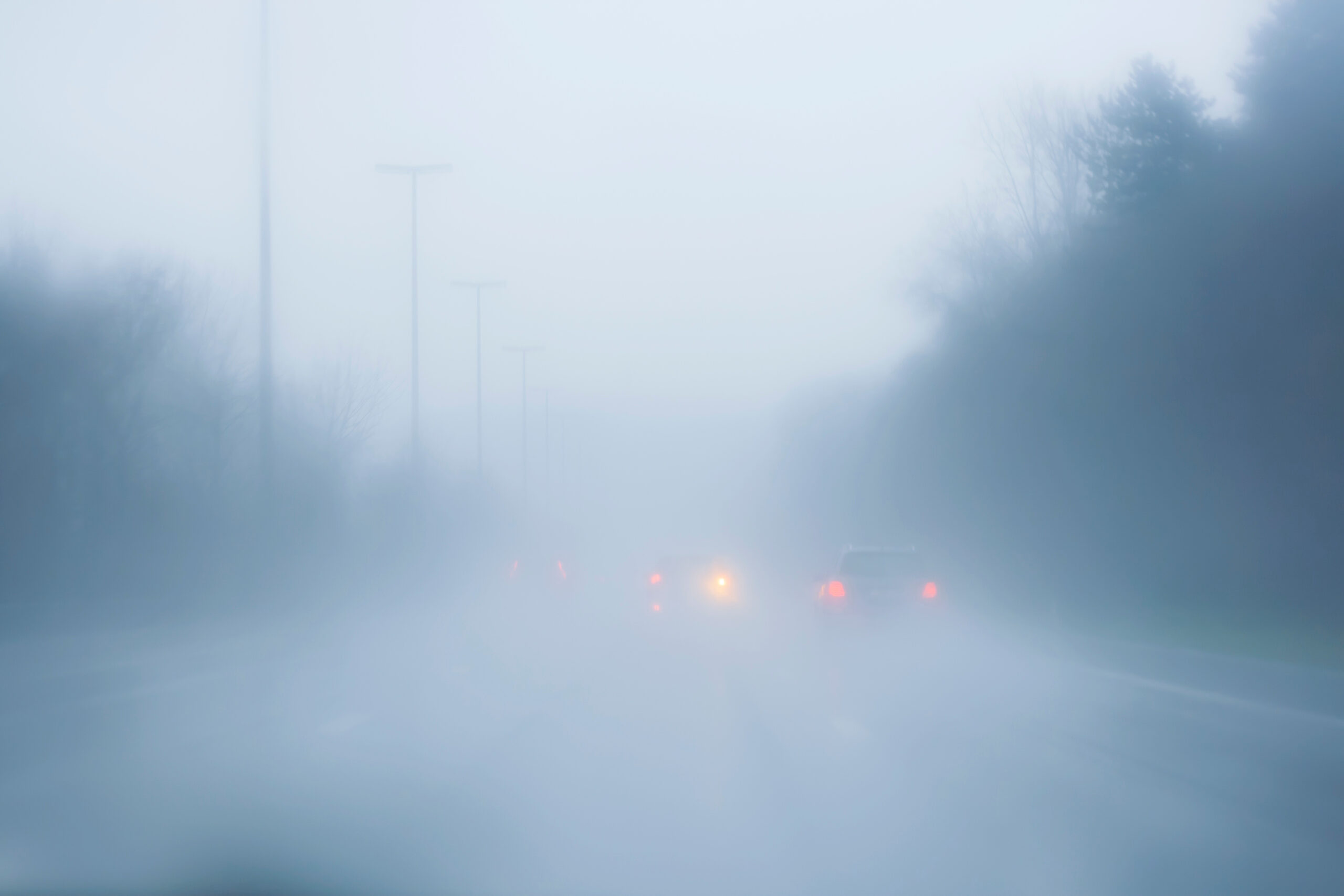
Fog is one of the most dangerous driving conditions because it significantly reduces visibility and depth perception. Unlike rain or snow, fog can appear suddenly and create rapidly changing conditions, increasing the risk of rear-end collisions, lane departures, and chain-reaction accidents.
The primary hazard of fog is limited visibility. Drivers may not see vehicles, pedestrians, road signs, or obstacles until they are dangerously close. Depth perception becomes distorted, making it difficult to judge speed and distance. This often leads to drivers following too closely or misjudging stopping distances.
When driving in fog, reducing speed is essential. Slower speeds allow more time to react to sudden hazards and reduce the severity of potential collisions. Drivers should increase following distance and avoid sudden braking or lane changes. Using low-beam headlights—not high beams—helps improve visibility, as high beams reflect off fog and reduce vision. If equipped, fog lights should be used appropriately.
Staying within lane markings can help maintain proper positioning when visibility is poor. Drivers should avoid distractions and remain focused on the road. If conditions worsen, pulling over to a safe location and waiting until visibility improves may be the safest option.
Commercial drivers face additional challenges due to vehicle size and longer stopping distances. Extra caution is required on highways, bridges, and low-lying areas where fog tends to linger.
Fog demands patience and awareness. Understanding the risks and adjusting driving behavior accordingly helps reduce accidents and ensures safer travel until conditions clear.